Overseas Disconnection? 2026 International SMS Delivery Rate "Revival" Guide
Many overseas businesses fail at the first step of user registration.
Verification code not received, ads blocked by carriers, backend shows "sent successfully" but users don't respond. You think you saved on international SMS prices, but actually lost expensive customer acquisition traffic. In 2026, the era of cheap bulk messaging is completely over.
I. Pain Point Self-Check: Why Is Your SMS Disappearing Into The Void?
- Route Blackhole:For 2 fen cheaper, chose multi-level relay garbage routes with packet loss rate up to 30%.
- Copywriting Minefield:Keywords triggered local carrier AI audit, directly silently blocked in backend.
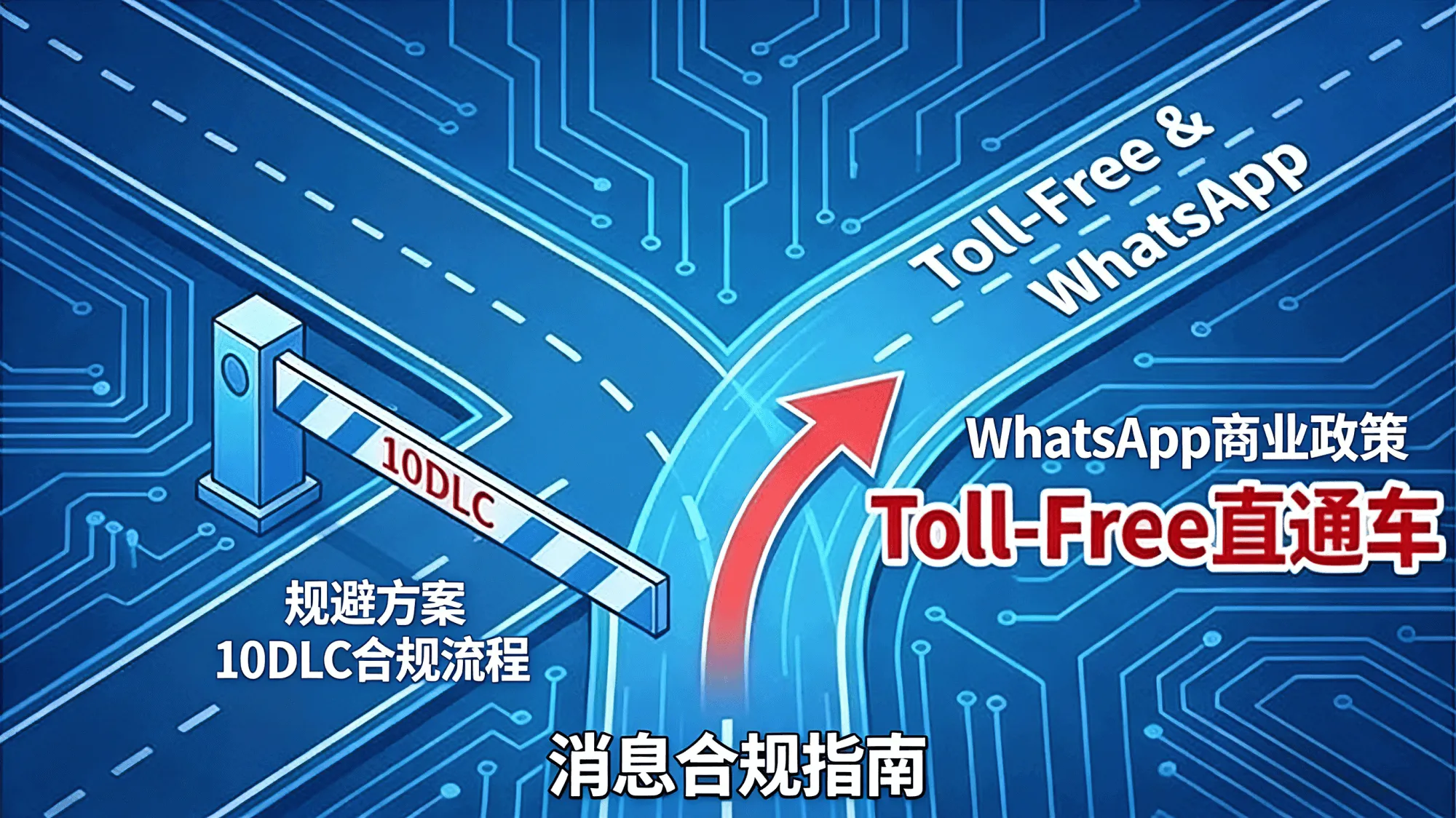
- Compliance Blind Spot:Unfamiliar with US 10DLC or Singapore SSIR certification, account suspended after sending just hundreds of messages.
II. Three Ready-to-Use Efficiency Strategies
1. Establish "SMS + Voice" Dual Track Disaster Recovery
SMS is not the only lifeline. During global SMS API documentation download phase, technical teams should integrate logic switching. When system detects SMS delay exceeding 20 seconds in certain countries (like Brazil), immediately trigger voice verification code broadcast. This solution can instantly boost registration conversion rate by over 15%.
2. AI Dynamic Desensitization and Content Fission
Stop using the same template globally. Through AI-powered smart SMS copywriting generation, create differentiated suffixes for different carriers (like Vodafone, Movistar). Using random variables to replace sensitive words can effectively bypass firewalls. For marketing, abandoned cart recovery SMS templates must be paired with local holiday timestamps to achieve precise targeting.
3. Interception Warning: From Passive to Active
In 2026, black market volume attack costs are extremely low. You must configure international SMS anti-fraud mechanisms. Intercept abnormal frequency requests through IP geolocation and mobile number home location verification. This is not just about saving money, but also about protecting your SMS channels from being blacklisted by carriers.
III. Deep Case Study: Gaming Giant's "Southeast Asia Comeback Battle"
Client Background:A domestic strategy mobile game launched in Indonesia with registration process loss rate as high as 40%.
Core Problem:Due to complex local infrastructure, ordinary verification code delivery rate is extremely low, and faces severe SMS bombing attacks.
Practical Actions:
- Route Cleaning:Abandoned previously connected second-tier distributors, directly switched to first-tier suppliers with 24-hour human support.
- Strategy Diversion:For Telkomsel users, forced dedicated channel; for other smaller carriers, enable bidirectional channel verification.
- Link Encryption:Introduced zero-trust architecture to ensure verification codes are not hijacked during transmission.
Final Results:The game's registration delivery rate in Indonesia rose from 62% to 98.5%. Daily savings from bad debt caused by malicious volume attacks is approximately $3,200 USD.
IV. 2026 Professional Endorsement and Data Dashboard
- Official Data:According to GSMA 2026 report, 85% of global carriers have completed AI spam filtering system upgrades, compliance has become the sending threshold.
- Conversion Comparison:In Latin America, brands using bidirectional interactive SMS marketing have user activity (DAU) 2.8 times higher than one-way notification brands.
- Compliance Recommendation:Currently over 50 countries require enterprises to pre-register Sender ID.
Industry Consensus: The essence of international SMS is "delivery rate" rather than "unit price". In 2026, SMS that enables business operations is the cheapest SMS.
How will the SMS industry upgrade in 2026?For more overseas solutions, you are welcome.Contact us。